
Committed capacity
Match bandwidth to the workloads and concurrent use your site must support.
Business-grade connectivity
Dedicated internet access gives critical locations committed connectivity, predictable performance, and clearer service expectations when shared broadband is not enough.
Dedicated internet access is a business internet service bought as a committed amount of capacity rather than as a best-effort share of what the access line can reach. What you are purchasing is the commitment: a rate reserved for your site, typically the same in both directions, together with service terms stating how availability is measured and how faults are handled. That is a different purchase from the fastest business plan available at an address, where performance expectations and any service terms depend on the product and the provider. Most DIA is delivered over fiber, though providers also offer it over other access technologies where fiber is not available, and delivery options are confirmed during qualification at the exact address. Whether a site needs it depends on how the connection is used and what the business depends on if it degrades.
Match bandwidth to the workloads and concurrent use your site must support.
Compare support, service terms, routing, installation details, and escalation expectations.
Decide whether a diverse backup circuit or managed WAN belongs alongside the primary connection.
Consider DIA where busy-hour cloud, voice, video, large uploads, or public-facing applications need predictable capacity and a defined service commitment. Weigh that need against the cost of downtime and the cost of capacity you may not use. If a shared business fiber connection handles peak work and the backup plan meets your outage tolerance, paying for DIA may not improve the decision.
A branch that can schedule large transfers outside busy hours may be well served by shared fiber. A site where calls, order processing, and uploads peak together has a stronger case for committed capacity. Test both choices against actual traffic and outage tolerance.
What separates the two is not speed but what the service commits to, and that varies more than the marketing suggests. Shared business internet is sold on performance the provider expects the connection to reach, and what that means in practice differs by product: some shared plans are symmetrical and carry service-level terms, others are not, and the guarantees attached to either vary by provider and by the specific plan. Dedicated internet access is bought differently. It is typically provisioned at a committed rate reserved for the site, usually symmetrical, with defined service terms attached to that commitment: how availability is measured, how quickly a fault is responded to, and what remedy applies if those are missed. Those terms are what the additional cost buys.
Worth keeping in perspective: committed capacity applies to the connection the provider delivers, not to every destination across the public internet. Traffic still crosses shared networks beyond the provider's own, and a dedicated circuit does not guarantee a particular speed to a given site or service. What it commits is the rate at the service handoff and the provider's own performance measures.
Upload is where the difference tends to matter most. A shared plan may be symmetrical or may not, and it may or may not carry upstream commitments. Where a business depends on sending data out, cloud backups, video calls, hosted voice, file transfers, or public-facing applications, upstream performance and the terms behind it deserve as much scrutiny as the download figure. The case for dedicated capacity is strongest where several of those run at once and inconsistent performance has a direct operational or revenue cost. A location that primarily browses, emails, and schedules large transfers outside busy periods may find that a suitable shared business connection meets its needs. Whether DIA is worth the additional cost depends on the site's performance requirements, reliability expectations, and the consequences of an outage.
The difference is what the speed claim commits to deliver. Shared or best-effort access is commonly sold at an up-to rate, while a DIA proposal should state the committed capacity at its handoff. Mplify's Carrier Ethernet standards describe committed bandwidth profiles for an underlying service. Check the actual quote and SLA for where the commitment is measured; a dedicated access circuit does not guarantee performance across the entire public internet.
Symmetry matters for a similar reason. Many broadband products favor fast downloads over uploads, which works for browsing but bottlenecks anything sending data out: video calls, backups, and VoIP all depend on upload capacity as much as download. Symmetrical service matches the two, so outbound traffic isn't competing for a fraction of what inbound gets. How much committed capacity or symmetry a given site actually needs depends on its mix of applications and concurrent users, not a fixed number that applies everywhere.
Size from peak, not average, upload and download use. Include simultaneous cloud and hosted applications, video meetings, voice, large transfers, backups or replication, guest traffic, and expected growth. Check each site separately. A lower committed rate can be more useful than a higher advertised up-to rate for traffic sensitive to variation, but it still must accommodate actual peaks. Headcount alone cannot determine the right bandwidth.
A service-level agreement is what turns "dedicated" from a marketing term into an actual commitment, and terms vary meaningfully by provider. Service availability is the most visible piece, but it's worth reading past the headline number to see what counts as an outage, how it's measured, and what remedy applies if the commitment isn't met, including repair and restoration commitments, the escalation path if those aren't honored, and whether service credits apply.
Performance terms beyond uptime matter just as much. Latency, the delay moving data between two points, affects how responsive real-time voice, video, and cloud applications feel. Jitter, the variation in that delay packet to packet, is what causes choppy audio and video even when overall bandwidth looks fine, since voice and video depend on packets arriving at a steady pace. Packet loss forces retransmission and dropped frames, showing up as garbled calls or frozen video. None of these figures are guaranteed to match across providers or plans; every SLA needs to be read for what it actually promises, not assumed from the product name.
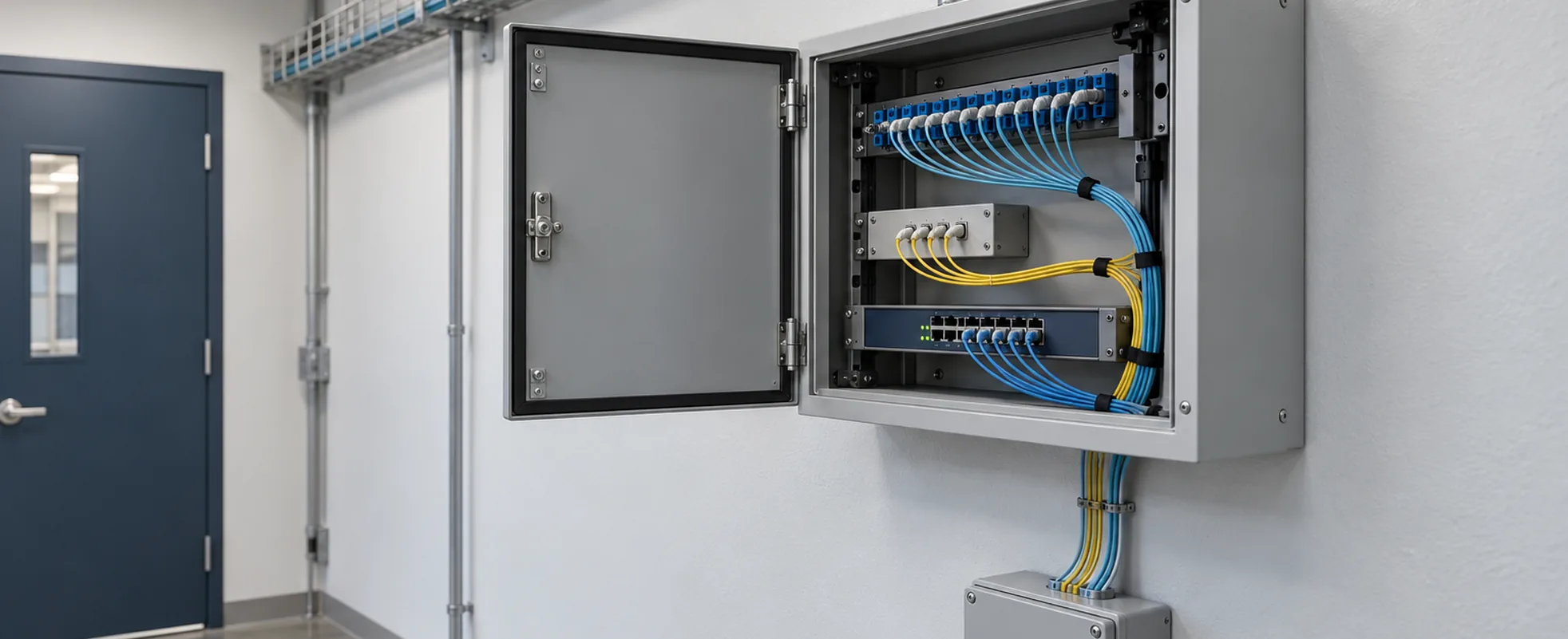
A second internet connection only creates real redundancy if it can fail independently of the first. Two circuits from the same carrier, entering the building through the same conduit, or riding the same regional infrastructure can go down together in the exact outage they were meant to protect against. Carrier diversity (using a different provider for the backup) and physical or path diversity (a different entry point or route into the building) both reduce the odds that one event takes out both connections at once.
How much diversity is worth pursuing depends on what's actually at stake at that site. A location running customer-facing services or high call volumes has more reason to invest in genuinely independent backup paths than a site where a short outage is an inconvenience rather than a business problem; there's no single redundancy design that fits every site. If a cellular or fixed-wireless connection is the likely backup, check what a wireless backup does and does not protect against before counting it as an independent path.
There is no useful DIA price without an address and design. Two sites requesting the same committed bandwidth may receive different quotes because carrier facilities, market, building access, equipment, IP needs, contract term, or a second circuit differ. Ask each provider to separate the monthly recurring service charge from one-time installation or construction charges. A low monthly figure is incomplete if site work remains unqualified.
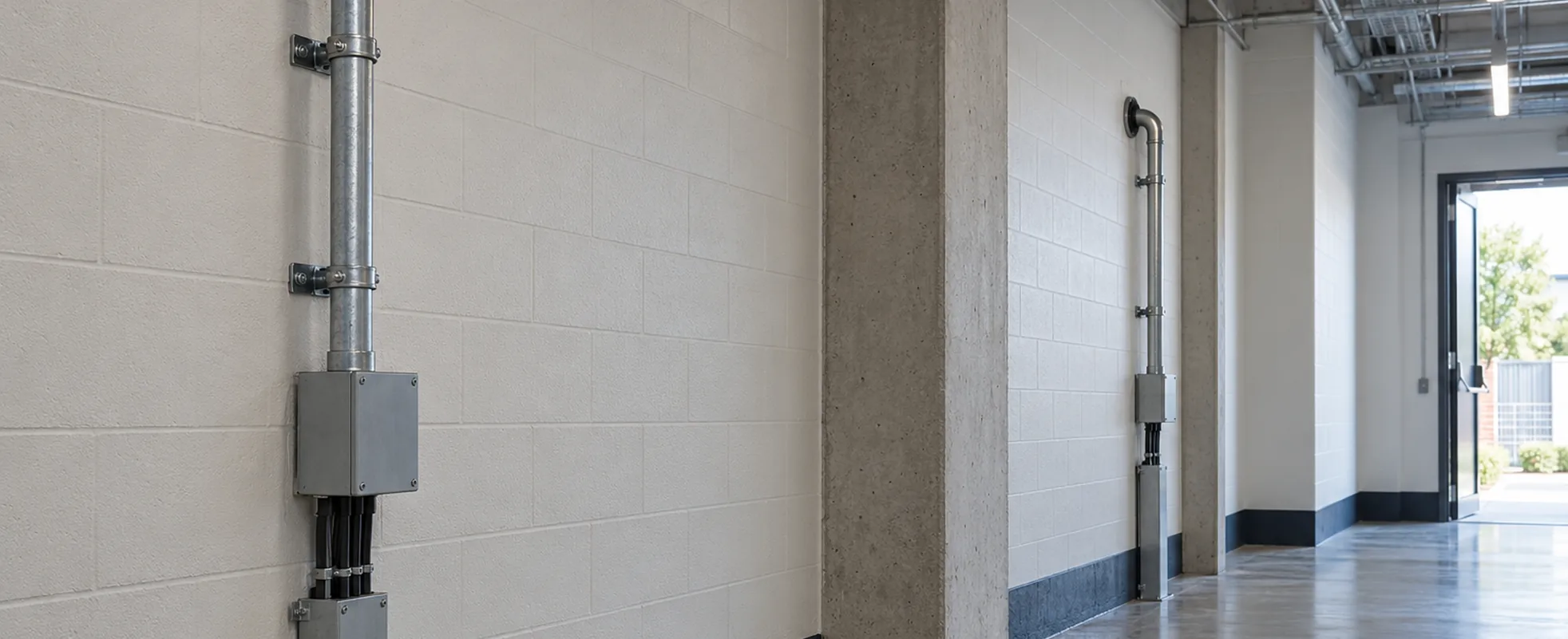
Fiber near a building does not by itself confirm a serviceable handoff at your suite. Address qualification should establish the building entry, demarcation, inside wiring, and any property access or construction needed. A carrier implementation guide illustrates why a build may be required where usable access is absent. Ask who performs and pays for site work, which charges are firm or conditional, and who owns installation tasks. Do not assume a universal construction scope or timeline.
Give providers the same requirements, then compare these assumptions before comparing totals:
The exact site and suite, qualified carrier facilities, building entry, and any construction assumptions.
The same committed symmetrical bandwidth, service handoff, and demarcation location.
Monthly recurring and one-time charges, installation or construction allowances, contract length, and minimum commitments.
Availability and performance measures, how they are measured, repair process, credits, and escalation ownership.
Managed equipment, public IP allocation, and who supplies, configures, and maintains the handoff.
Backup circuit and path-diversity assumptions, their separate costs, cutover tasks, and installation responsibilities.

Dedicated internet access does not need to sit at every address a business operates from. The more useful question is which sites are actually critical enough to justify it: locations running customer-facing services, high call volumes, or workloads that can't tolerate inconsistent performance are the natural candidates for DIA, while lower-risk locations with lighter usage may be well served by standard business internet instead. Connectivity requirements can reasonably differ by location rather than defaulting to the same solution everywhere.
Backup connectivity still deserves a plan at each site, whether or not that site runs on DIA, and coordinating how connectivity is scoped and installed across multiple locations keeps the overall rollout consistent even when the underlying service differs site to site. Once a business is managing DIA at some locations and standard internet at others, managed SD-WAN is one way to unify how that mixed environment is routed and managed.
DIA is internet service with a stated committed capacity and service terms. Confirm the bandwidth, handoff, and performance commitments in the actual proposal.
There is no reliable price without an address and design. Compare monthly service charges with separate installation or construction charges, equipment, IPs, contract term, and any backup circuit.
Only when the site's workload or outage risk justifies its commitments. Shared business fiber may be sufficient if busy-hour performance, support, and backup meet the need.
Review peak upload and download demand from simultaneous cloud work, video, voice, transfers, backups, and guest use. Allow for growth; headcount alone is not enough.
Confirm the address, committed bandwidth, handoff, monthly and one-time charges, construction assumptions, SLA, equipment, IPs, installation ownership, and any backup design.
Yes. Nearby fiber may not reach a usable handoff at your building or suite. Qualify the exact address and ask which site work and charges remain conditional.
DIA can still fail. Decide whether the site's outage tolerance calls for a second connection, and check whether its carrier, route, and building entry can fail independently.
No. Fiber is the most common way providers deliver it, and generally the most capable where it is available, but DIA is defined by the service terms rather than by the access technology. Providers also deliver it over licensed fixed wireless and, in limited markets and from specific providers, over hybrid fiber-coax. Availability depends on provider qualification at your exact address, so the delivery method is confirmed during that process rather than assumed.
Bring the address, workload, and timeline. We’ll compare dedicated access paths that can actually serve the location.